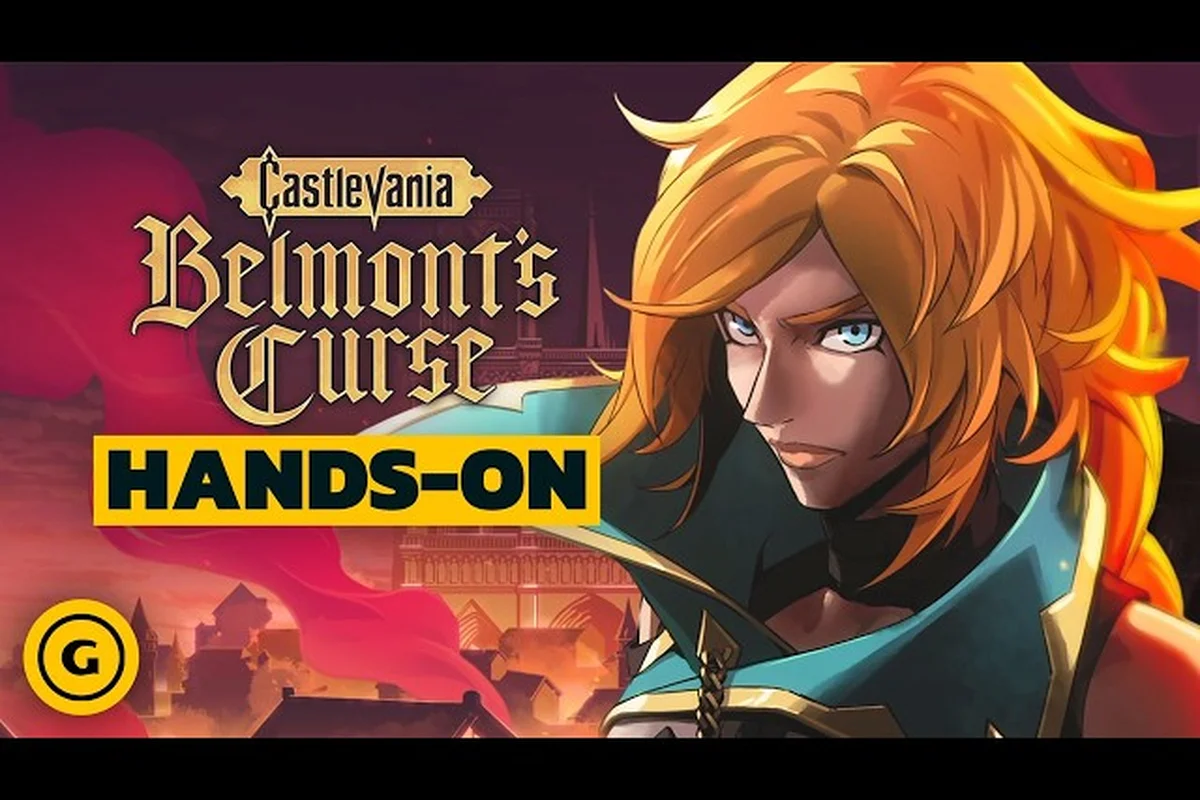
The question of whether belmont's curse is dracula the final boss has sat at the center of community theorizing since the official reveal. Konami, Evil Empire, and Motion Twin have positioned this entry as a direct continuation of Castlevania III: Dracula's Curse, set in 1499 Paris, and the marketing language keeps pointing back to the Belmont bloodline's oldest enemy. Speculation is healthy when grounded in verifiable material, so the breakdown below weighs the on-the-record evidence, the boss count, and the patterns that typically lead to a Dracula showdown in this franchise.
Why the Castlevania: Belmont's Curse Dracula Question Won't Go Away
The franchise has trained players to expect a vampire patriarch at the end of every major Belmont chapter. That expectation alone fuels the rumor cycle, but the 2026 reveal window has also given us concrete new information. According to the official Castlevania: Belmont's Curse Steam page, Rose Belmont's story begins 23 years after Castlevania III: Dracula's Curse and follows her through a freshly manifested castle in 15th-century Paris. The official Konami product page reinforces that "a new chapter of the legendary House of Belmont is about to be written in bloody red ink."
Three pieces of context keep the Dracula theory alive among players tracking the Castlevania: Belmont's Curse boss list: Rose's 1476 narrative already sits inside the canonical Dracula X / Rondo of Ruins timeline window, the Paris-set castle stage mirrors the late-game aesthetic of previous flagship closers like Curse of Darkness's Dracula boss, and the 2026 reveal trailer's crimson-rose imagery matches the iconography Konami historically reserves for the franchise's vampire patriarch final encounters.
-
Timeline pressure: 1499 is one year before Castlevania: Symphony of the Night's 1797 reset, which means the franchise still needs a Dracula-era anchor before Richter's era begins.
-
Marketing tone: Konami's taglines lean on "bloody tears," "vengeance," and a "rose stained by blood," language historically reserved for climactic showdowns.
-
Genre convention: Every 2D Castlevania flagship release closes on a vampire lord, and Belmont's Curse is being positioned as a flagship.
For comparison with the confirmed optional encounters, the optional boss roster breakdown already shows Death, Medusa, Carmilla, Joan of Arc, Isaac, and The Fallen as named encounters, leaving Dracula as the obvious narrative capstone if the title follows franchise tradition.
What the Official Reveals Actually Show
The reveal trailers and the Wikipedia entry for Castlevania: Belmont's Curse describe Rose as the daughter of Trevor Belmont and Sypha Belnades, hunting across Paris while the titular castle physically invades the city. That setting pushes toward a castle-top finale more than a mid-game twist ending, and the developers have publicly described the structure as a "2D Action-Exploration title" built around gating, traversal, and boss milestones.
Reading the Castlevania: Belmont's Curse Boss Count and Mini-Boss Roster
The castlevania belmont's curse mini bosses question gets clarified once you separate true mini-bosses from the small roster of named elite encounters. Mini-bosses in this style of Metroidvania usually sit at zone checkpoints, gate progression, and respawn at save benches rather than function as plot milestones. They are the encounters you farm for arcana cards and relic drops, not the ones that trigger cutscenes.
Known Named Bosses and Their Probable Place in the Run
The currently confirmed named bosses map cleanly onto the acts the developers have hinted at. Based on community tracking of trailers and the Castlevania: Belmont's Curse boss guide index, here is how the named encounters line up with the expected structure.
| Boss Name | Confirmed Tier | Probable Act | Lore Role |
|---|---|---|---|
| Prologue Gatekeeper | Mini-boss | Prologue | Combat tutorial gate |
| Medusa | Optional named boss | Act 1 | Returning franchise boss |
| Death | Optional named boss | Act 2 | The Reaper's traditional mid-game role |
| Carmilla | Optional named boss | Act 2 | Vampire moon-gate encounter |
| Joan of Arc | Mandatory named boss | Act 3 | Holy-light duel, story-locked |
| Isaac | Mandatory named boss | Act 3 | Devil Forge arena |
| The Fallen | Optional secret boss | Act 4 | Secret ending gate |
| TBD (Dracula?) | Final boss candidate | Act 4 or Epilogue | The franchise capstone |
The castlevania belmont's curse boss count therefore sits in the rough range of 12 to 18 fights when you include mini-bosses plus a potential post-game Boss Rush layer. That estimate is consistent with the castlevania belmont's curse hard mode guide's discussion of endgame gauntlet structure, which describes a Boss Rush mode that chains the same encounter pool back-to-back rather than adding new bosses.
How Mini-Bosses Differ From the Main Roster
Players who have been hands-on with the demo and early access builds report that mini-bosses reuse enemy kits with elevated stats and tweaked phase scripts. They are designed as a Skill Gate, not a story moment, and they typically drop:
-
A guaranteed Weapon upgrade material (whip binding, sword oil, axe rune)
-
One Arcana card from a fixed drop table
-
A small relic or gold payout appropriate to the act's economy
This is why castlevania belmont's curse mini bosses function as training wheels for the real test: the late-game mandatory bosses and the final encounter with Dracula himself. Mini-boss stat inflation caps around 1.5–2x base enemy HP, while late-game boss arenas in Act 7–9 routinely apply enrage timers, multi-phase scripted damage spikes, and arena hazards that the mini-bosses never introduce — meaning the belmont's curse boss rush mode and the final gauntlet demand reflexes the earlier encounters only begin to rehearse.
The Belmont's Curse Dracula Fight: What the Lore Demands
When weighing the belmont's curse dracula fight theory, the franchise's internal logic is the strongest single argument in its favor. The 1499 setting is not accidental. It is the closing chapter of the medieval Belmont era, and it is the year that Dracula's curse cycle has to break, transform, or hand off responsibility to the next generation.
Why 1499 Almost Forces a Dracula Encounter
Three structural reasons make the Dracula finale feel like a near-certainty, each rooted in Belmont's Curse's own boss pipeline and lore architecture: the bloodline tradition has funneled every flagship Belmont into a vampire throne-room clash, the Paris-anchored castle gives that confrontation a fixed stage, and the Symphony of the Night handoff demands a 1499 capstone before Richter's 1792 storyline begins.
-
The Belmont bloodline tradition: Rose is a Belmont, and every Belmont's defining moment in a flagship title has been a vampire confrontation, even when that vampire is a lesser noble or a fragment of Dracula's power.
-
The castle's narrative necessity: The official site describes the castle as physically manifesting in Paris, which gives Dracula (or his preserved essence) a literal throne room to defend.
-
The Symphony hand-off: Anything that happens in 1499 must be resolved before Richter Belmont inherits the whip in 1792, so the developers need a clean capstone to explain the century of relative peace that follows.
The Counter-Argument: Why It Might Not Be Dracula
There is a credible alternative read. Several modern Castlevania entries have subverted the expected Dracula finale in favor of a thematic or structural twist. The Fallen is already positioned as a secret ending gate, which could mean the developers have split the finale into a "canonical" and a "true" route. The belmont's curse death fight also has more weight in this build than in most predecessors, because Death is positioned as both a recurring rival and a potential gatekeeper of the final arena.
That structure is consistent with what the Castlevania: Belmont's Curse endings walkthrough outlines, where multiple endings and a mercy prompt at the climax reward different play styles, and the route you commit to before stepping into the throne room directly affects whether you ever see Dracula's Phase 3 regenerator form or settle for the Death replacement stinger instead.
Boss Rush Mode and the Post-Game Test of Your Build
The castlevania belmont's curse boss rush mode is the most concrete reason players keep refining their Dracula theory builds. A Boss Rush that chains every major encounter back-to-back is a hard filter for late-game scaling, and it is the mode where any final boss theory gets stress-tested the most.
What Boss Rush Confirms About the Roster
Boss Rush modes almost never add new bosses; they test your mastery of the encounters you already learned, which is why a Belmont's Curse stage list functions as an indirect map of the main campaign's mandatory and optional hierarchy. In this build, the pattern looks deliberate: mini-bosses for Arcana cycling, named optional bosses for parry timing, mandatory gatekeepers like Joan and Isaac for enrage handling, and The Fallen plus a finale slot for sustained aggression. The question is what that finale slot actually contains.
| Boss Rush Stage | Encounter | Build Test |
|---|---|---|
| Stage 1-3 | Mini-boss rotation | Resource management, Arcana cycling |
| Stage 4-6 | Named optional bosses | Phase reads, parry timing |
| Stage 7-8 | Mandatory bosses (Joan, Isaac) | Damage routing, enrage handling |
| Stage 9-10 | The Fallen + finale | Sustained aggression, mercy prompt logic |
If the final entry in the chain is a Dracula encounter, then Boss Rush effectively becomes a soft spoiler for the campaign climax. If the final entry is instead a non-Dracula boss (Death in his true form, an Alchemist Council elder, or The Fallen), then Boss Rush is the only realistic way to test that build outside the secret ending route.
How to Prep for Boss Rush Without Knowing the Finale
Players planning to chase the hardest difficulty should prep defensively regardless of which boss closes the gauntlet. The community-shared prep list, drawn from Castlevania: Belmont's Curse hard mode guide discussions and demo feedback, comes down to four priorities:
-
Max your whip's reach and weight tier before the rush, because every encounter has some melee punish window.
-
Stack two defensive relics, because Boss Rush removes the long recovery windows between rooms.
-
Keep one Arcana slot open for the final phase, so you can answer whatever element the closer uses.
-
Farm The Fallen's pre-encounter as a warm-up, since his arena geometry mimics several late-game rooms.
If Dracula Is the Final Boss, What the Fight Probably Looks Like
Speculation gets sharper once it locks onto mechanics. If belmont's curse is dracula the final boss, the community is modeling the encounter on Konami's recent patterns: a multi-phase gauntlet seeded by the mini bosses already confirmed in the demo (likely the Bone Golem and spectral carriage variants), a resource-drain check that punishes greedy healing, and a phase-three stake finisher that mirrors the Castlevania series' classic silhouette shift. Layered on top is the belmont's curse death fight clause — a permadeath modifier rumored to trigger on the final hit, turning the belmont's curse dracula fight into a one-shot window for players chasing the boss rush mode ending and the secret-class unlock.
Phase Structure the Community Predicts
| Phase | Theme | Player Test |
|---|---|---|
| Phase 1 | Disciplined swordsman | Parry timing, mid-range spacing |
| Phase 2 | Elemental storm | Arcana cycling, reposition discipline |
| Phase 3 | True form (winged, towering) | Vertical movement, whip aerial routes |
| Phase 4 | Mercy prompt / final blow | Weapon choice and story choice |
A four-phase structure is consistent with how the Castlevania: Belmont's Curse easiest boss design breakdown describes Medusa and Carmilla, where the developers clearly favor escalating phase counts with one hard enrage per phase.
The Mercy Prompt and the Endings Layer
The Castlevania: Belmont's Curse endings layer rewards players for reading the final encounter, not just surviving it. A Dracula final boss, if it exists, would almost certainly include a mercy prompt at the end of his final phase, mirroring the structure described in the endings explainer. Your weapon family, Arcana choice, and even your relic loadout would all feed into which ending the prompt resolves to.
Frequently Asked Questions
Is Dracula confirmed as the final boss of Castlevania: Belmont's Curse?
No official confirmation has shipped, but the 1499 setting, the franchise's pattern, and the marketing tone make Dracula the most likely candidate. The official Steam listing describes the castle manifesting in Paris, and that throne room almost has to be defended by someone with centuries of narrative weight.
How many bosses are in Castlevania: Belmont's Curse in total?
The castlevania belmont's curse boss count looks like 12 to 18 encounters, depending on how you count mini-bosses. There are six confirmed named bosses, plus a prologue gatekeeper, several zone mini-bosses, and a post-game Boss Rush that reuses the same pool. The Castlevania: Belmont's Curse boss list guide tracks every confirmed name as new reveals drop.
What is the difference between mini bosses and main bosses in Belmont's Curse?
Castlevania belmont's curse mini bosses are high-HP zone checkpoints that gate progression and respawn at save benches. They drop arcana cards and upgrade materials, but they do not advance the plot. The main roster (Death, Medusa, Carmilla, Joan of Arc, Isaac, The Fallen) drives the story and is built around longer phase scripts and unique arenas.
Does the Boss Rush mode include the final boss?
The castlevania belmont's curse boss rush mode chains the full encounter pool back-to-back and almost certainly includes the finale. That is why it is the strongest single test of any build, and why players prepping for the hardest difficulty farm The Fallen's pre-encounter as a warm-up. Boss Rush is gated behind the campaign's ending tier.
Will Death appear as a boss before the finale?
Yes. The belmont's curse death fight is already confirmed for Act 2 as an optional encounter. Death is positioned as a recurring rival through the campaign and is widely expected to gate or parallel the finale, especially in the secret ending route where The Fallen already serves as a final check.