
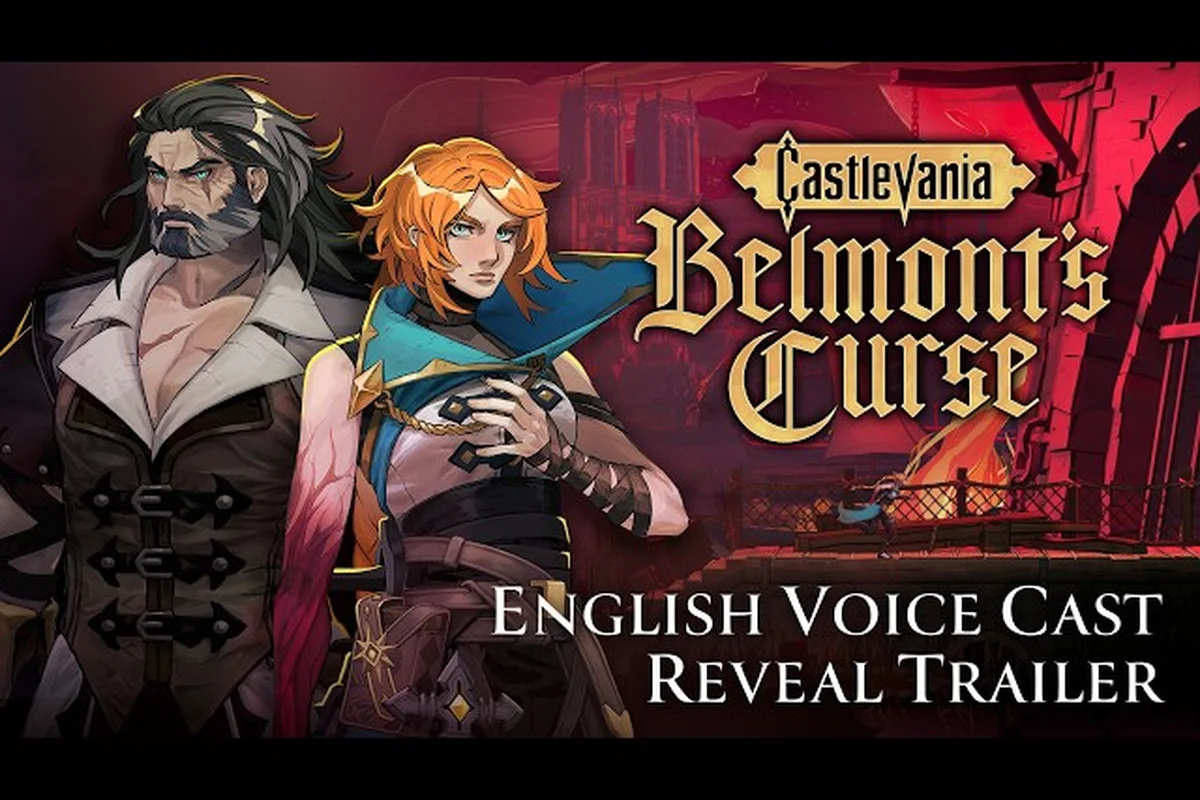
Castlevania: Belmont's Curse is a 2D action-exploration title set 23 years after Castlevania III: Dracula's Curse, and the plot summary places Rose Belmont on a personal crusade through 1499 Paris. Knowing where this entry sits in the series timeline, what drives the story forward, and how it ties back to Trevor and Sypha's original adventure is essential before stepping into the castle.
Building on this desperate hunt for his missing son, the narrative sees Quincy Belmont exploring a foreboding 18th-century Spanish village, where villagers are said to be disappearing and a mysterious evil has awakened, and according to the official Steam store page for Castlevania: Belmont's Curse, the story draws directly from the lore established in Castlevania: Nocturne while expanding on the long-running Belmont family saga.
What the Castlevania: Belmont's Curse Plot Summary Covers at a Glance
The game follows Rose Belmont, daughter of Trevor Belmont and Sypha Belnades, who carries a curse that blossoms whenever she confronts vampiric forces. The setup is direct: a single Belmont heir, a single haunted city, and a single castle that has appeared in the middle of Paris. The story is built on the question of whether Rose can break her bloodline's repeating pattern or become another chapter in the family tragedy.
The setup is rooted in the official synopsis: it is in the streets of 15th century Paris that a new chapter of the legendary House of Belmont is about to be written, while the castle itself manifests directly in the city — a first for the franchise in this particular era. Players experience a tightly focused narrative rather than a sprawling ensemble piece.
The core dramatic tension revolves around three interlocking elements: The Crimson Curse that marks Rose's blood and powers her combat style, The Manifested Castle that has appeared in Paris as a recurring supernatural threat, and The Belmont Legacy of 1499, which determines whether Rose can finish what her father started decades earlier. These pillars collide because the castle's manifestation feeds directly on Rose's curse, forcing her to weaponize the very bloodline affliction that threatens to consume her — a feedback loop unique to this installment's setting.
-
The Crimson Curse that marks Rose's blood and powers her combat style
-
The Manifested Castle that has appeared in Paris as a recurring supernatural threat
-
The Belmont Legacy of 1499, which determines whether Rose can finish what her father started decades earlier
This compact setup lets the game deliver a focused character study inside a familiar Castlevania framework. The story does not sprawl across multiple continents or hop between time periods; it stays anchored in one city, one family, and one fateful night.
| Story Pillar | What It Means in 1499 |
|---|---|
| Setting | 1499 Paris, two decades after Trevor's victory |
| Protagonist | Rose Belmont, daughter of Trevor and Sypha |
| Central Conflict | A castle has manifested in Paris, drawing Rose into a new crusade |
| Stakes | Rose's curse, the city's survival, and the Belmont name |
| Series Position | A direct sequel to Castlevania III: Dracula's Curse |
Where Belmont's Curse Sits in the Castlevania Timeline
Timeline Placement Relative to Dracula's Curse
Castlevania: Belmont's Curse timeline placement lands squarely between two well-known entries. The game takes place 23 years after the events of Castlevania III: Dracula's Curse (1989) and falls into the same rough era as Castlevania: Curse of Darkness (2005), which chronicles Hector's story. This puts Rose's crusade in a quieter historical window — Dracula has been defeated, but the supernatural scars of 1476 have not fully healed.
The timeline placement matters because it answers a long-standing fan question: what happened to the Belmont family between the medieval crusades and the 18th century battles starring Richter? Belmont's Curse fills that gap with a story about Trevor and Sypha's daughter, making the family tree feel continuous rather than disjointed.
Canon Status and Series Numbering
Castlevania: Belmont's Curse is it canon as a mainline entry, and Konami has officially designated it the 26th mainline title in the franchise. This is not a spinoff, not a side story, and not a remake — it is a numbered sequel that continues the central Belmont mythos. The official Steam listing confirms it as a new 2D action-exploration title developed by Konami alongside Evil Empire and Motion Twin, which positions it as a flagship release rather than a smaller experimental project.
For players wondering whether Belmont's Curse is it canon, the answer is unambiguous. Konami's official site describes the story as a "new chapter of the legendary House of Belmont," and the timeline placement 23 years after Dracula's Curse means it slots directly into the canonical chronology. The game does not exist in a vacuum or an alternate universe.
| Series Entry | Year of In-Game Events | Relation to Belmont's Curse |
|---|---|---|
| Castlevania III: Dracula's Curse | 1476 | Direct predecessor, 23 years before |
| Castlevania: Curse of Darkness | 1476–1477 | Overlapping era, follows Hector |
| Castlevania: Belmont's Curse | 1499 | Current entry, follows Rose |
| Castlevania: The Dracula X Chronicles | 1792 | Several generations later |
The Dracula's Curse Sequel Connection
Castlevania: Belmont's Curse dracula's curse sequel framing is intentional, not incidental. The development team has leaned into the inherited-legacy angle, casting Rose as the daughter of two of the most beloved protagonists in the franchise. Trevor and Sypha are not just name-dropped in backstory files — they anchor Rose's motivation, and the city of Paris is deliberately chosen because it sits outside the usual Transylvanian geography of the earlier games.
This geography shift is meaningful for longtime fans. Dracula's Curse took place in the Carpathians, Wallachia, and the surrounding Eastern European territories. Belmont's Curse moves the action westward into a major Western European capital, which gives the developers room to draw on French history and Gothic cathedral architecture rather than the familiar Eastern castles. The result is a sequel that feels both familiar and tonally distinct.
Rose Belmont's Story: Protagonist, Curse, and Motivation
Who Rose Is and What Drives Her
Rose is the only child of Trevor Belmont and Sypha Belnades, and she inherited both her parents' combat lineage and a unique supernatural condition known as the Crimson Curse. This curse activates when she confronts vampiric enemies, and it is visually represented by blood-red roses that bloom across her body during key story moments. The curse is not purely cosmetic — it is tied to her combat style and her ability to channel Arcana magic.
Her motivation is layered. On the surface, she is fighting to protect Paris from the castle that has appeared in the city's heart. On a deeper level, she is trying to prove that the Belmont name does not have to mean a lifetime of tragedy, isolation, and early death. The 1499 setting gives her a chance to break the cycle that has defined her family for generations.
The official store page frames this duality clearly: "A rose stained by bloody tears, rooted in vengeance" — a tagline that captures both the beauty and the violence of her journey. Players who want a deeper breakdown of her combat moves, Arcana, and supporting cast can check out the characters roster guide for a full breakdown.
The Crimson Curse Mechanic and Story Beat
The Crimson Curse is not just a gameplay mechanic — it is a narrative device that explains why Rose is uniquely qualified to face the manifested castle. The curse gives her access to Arcana magic, a tarot-based spell system that lets her seal defeated bosses into cards and summon their powers in combat. Mechanically, this is the signature new system of the game. Narratively, it explains why a single Belmont can handle threats that would normally require an entire hunting party.
The curse also raises the personal stakes. If Rose falls, the curse spreads; if she wins, the curse may consume her anyway. This dual outcome is what gives the 1499 crusade its tragic weight. Rose is not just fighting a castle — she is fighting her own blood.
| Story Element | Role in Rose's Arc |
|---|---|
| Crimson Curse | The supernatural inheritance that powers her combat |
| Arcana Magic | Tarot-based spell system sealed from defeated bosses |
| Rose's Whip | A non-traditional weapon that reflects her hybrid lineage |
| Paris Setting | Western European stage that breaks from the Transylvanian norm |
| Family Legacy | The motivating force behind her crusade |
Trevor and Sypha as Background Figures
Castlevania: Belmont's Curse is trevor playable in the sense that Trevor is referenced and appears in flashbacks or spectral moments, but he is not a playable character in the main campaign. Trevor and Sypha function as the parents whose shadow looms over the entire game, and the story makes clear that their victory in 1476 only delayed — not ended — the Belmont family's war with the supernatural.
Trevor's legacy is felt through several design choices that quietly thread his 1476 victory into every corner of Castlevania: Belmont's Curse, from item descriptions that name-drop the Vampire Killer's original wielder to environmental storytelling in the Belmont Estate that reframes his crusade as the catalyst — not the conclusion — of the family's endless war with Dracula's remaining acolytes.
-
Combat Style — Rose fights with a whip, but her combat style is more acrobatic and magic-focused than her father's
-
Belmont Estate — Family history is woven into the level design and item flavor text
-
Vampire Killer Lore — The legendary whip is referenced, even if Rose wields a different primary weapon
This approach lets the developers honor Trevor's role in the franchise without forcing a playable co-op mode or a flashback chapter — Rose carries the narrative as the protagonist, while Trevor and Sypha appear primarily through spectral echoes and diary entries that frame her journey as the direct consequence of the 1476 showdown depicted in Castlevania III: Dracula's Curse. By making Trevor's victory the inciting incident rather than the climax, the plot summary of Belmont's Curse ties its timeline placement squarely after the original Netflix series' conclusion, reinforcing canon continuity while shifting emotional weight to Rose's coming-of-age arc in the Belmont Estate ruins.
The Antagonist Side: Dracula's Court and Paris 1499
Who Rose Is Fighting
The Castlevania: Belmont's Curse lore expands the antagonist roster beyond the usual Dracula's Court lineup, drawing on French historical and mythological figures rather than Eastern European folklore. The castle that manifests in Paris is populated by bosses inspired by Joan of Arc, fallen angels, and corrupted French historical personalities. This is a deliberate departure from the Dracula-focused antagonist design of earlier entries.
Players who want a mechanical breakdown of the boss fights, including health pools, phase transitions, and weakness lists, can reference the Dracula boss guide for preparation. The final boss, however, is not necessarily Dracula himself — a key twist that has generated significant community discussion about whether the franchise can sustain itself beyond its central villain.
The Manifested Castle Explained
The castle's appearance in the middle of Paris is the inciting incident of the entire plot. According to the official synopsis, the castle manifests directly in the city — a supernatural event that has not happened in the franchise's 40-year history. The castle's interior blends classic Castlevania architecture (cathedrals, catacombs, clock towers) with French Gothic elements (Notre-Dame-inspired facades, Parisian street-level entry points).
The castle's manifestation also ties into a larger narrative question: if Dracula is truly defeated, what is generating the supernatural energy required to materialize an entire fortress? The game hints at answers but does not resolve them all in the main campaign, which leaves room for post-game content and potential future DLC.
| Story Element | Paris 1499 Context |
|---|---|
| Castle Origin | Manifested directly in the city center |
| Architecture | French Gothic blended with classic Castlevania design |
| Boss Theme | French history and mythology, not just Dracula's Court |
| Final Boss Identity | Not definitively Dracula (per community reports) |
| Stakes | City-wide destruction if Rose fails |
The Question of Dracula's Role
One of the most discussed topics in the community is whether Dracula appears as the final boss. According to community data and pre-release trailers, the answer is more complicated than a simple yes or no. Dracula's shadow looms over the story, but the developers have signaled that Rose's crusade is about more than just relitigating her father's battle. This shift opens the door for new villain types and fresh narrative angles, while still honoring the franchise's central mythology.
Players curious about the final boss identity and ending structure can check the endings explained guide for a detailed walkthrough of what to expect. The game features multiple ending paths, and the canonical outcome depends on several in-game choices that occur late in the campaign.
Story-to-Gameplay Integration and the 1499 Structure
Story-to-Gameplay Integration
The 2D action-exploration design is not just a technical choice — it directly serves the story. The compact map structure of Paris and the manifested castle allows for tight, focused exploration that mirrors Rose's personal journey. There are no sprawling open-world segments; instead, the game offers interconnected districts with shortcuts, fast travel points, and ability-gated progression. This design philosophy keeps the narrative momentum high because players are never far from the next story beat.
The Arcana system is the clearest example of story-to-gameplay integration. Defeating bosses seals them into tarot cards, which Rose can summon in combat. This mechanic is a narrative metaphor for absorbing the strength of her enemies — a theme that runs through the entire game. Each card represents a defeated adversary whose power Rose has inherited, and the player's choice of which Arcana to equip is itself a form of character building.
The Single-Protagonist Focus
Unlike Castlevania III, which featured multiple playable characters (Trevor, Alucard, Sypha, Grant), Belmont's Curse is a single-protagonist game. Rose is the only character the player controls, and her abilities, weapons, and Arcana define the entire gameplay loop. This design choice reinforces the story's focus on one Belmont heir facing one defining crusade.
The single-protagonist focus also means the game does not offer a co-op campaign or a character-swap mechanic. Trevor and Sypha appear as story elements, not as playable units. Players who want a co-op experience or a multi-character roster will need to look at other entries in the franchise, because Belmont's Curse is unapologetically a solo action-exploration title.
| Design Element | Story Function |
|---|---|
| 2D Action-Exploration | Reflects Rose's personal, focused crusade |
| Interconnected Districts | Mirrors the tight geography of 1499 Paris |
| Arcana Card System | Metaphor for absorbing enemy strength |
| Single Protagonist | Emphasizes Rose's individual journey |
| Boss Sealing Mechanic | Ties combat victories to narrative progression |
Save Rooms, Fast Travel, and Pacing
The save room and fast travel systems are designed to keep the narrative pacing tight. Save rooms serve as safe havens where Rose can rest, upgrade relics, and prepare for the next district. Fast travel points connect the major areas of Paris and the castle, reducing backtracking and keeping the story moving forward. These systems are not just quality-of-life features — they reflect the game's design philosophy of respecting the player's time while delivering a focused narrative experience.
Players who want a deeper breakdown of save room locations, fast travel routes, and resource management strategies can check the secret ending guide for advanced tips. The guide covers how to optimize exploration routes and avoid common progression mistakes that can lock players out of optional content.
Castlevania: Belmont's Curse Ending and What It Means for the Series
How the Main Story Resolves
The Castlevania: Belmont's Curse ending is structured around a climactic confrontation at the heart of the manifested castle, followed by a denouement that addresses Rose's personal arc and the fate of Paris. Without spoiling specific plot points, the ending resolves the immediate supernatural threat while leaving several narrative threads open for future entries. This approach is consistent with the franchise's tradition of ending individual games on a note of partial closure — the Belmonts never fully escape the supernatural cycle, but each generation buys the next one more time.
The ending also addresses the Crimson Curse directly. Rose's fate is tied to how the player has managed the curse throughout the campaign, and the canonical outcome reflects both her combat choices and the story decisions made during key boss encounters. This dual-track ending system gives the game significant replay value, because players who want to see all possible outcomes need to experiment with different builds and dialogue choices.
Multiple Endings and Canon Status
The game features multiple ending paths, including a standard ending, a true ending, and a secret ending that requires specific in-game actions to unlock. Each ending offers a different perspective on Rose's story and the future of the Belmont bloodline. The canonical ending — the one that Konami and the development team consider the "official" outcome — is accessible through the standard completion path, but the alternative endings add meaningful context to the franchise's larger mythology.
This multi-ending structure is not just a replayability feature. It reflects the franchise's long-standing interest in alternate timelines and divergent outcomes, a theme that runs from Castlevania: The Dracula X Chronicles through the more recent Castlevania: Grimoire of Souls. Belmont's Curse continues this tradition while anchoring it in a single, well-defined era of the series timeline.
| Ending Type | Unlock Condition | Narrative Weight |
|---|---|---|
| Standard Ending | Complete the main campaign | Canonical outcome, sets up future entries |
| True Ending | Specific Arcana and relic choices | Adds context to the Crimson Curse |
| Secret Ending | Hidden quest chains and NPC interactions | Expands the franchise's alternate timeline lore |
What This Means for the Castlevania Series Going Forward
Belmont's Curse is positioned as a flagship entry for a new era of the franchise. Konami has designated it the 26th mainline title, and the involvement of Evil Empire and Motion Twin — the studio behind Dead Cells — signals a long-term commitment to the 2D action-exploration format. The game's success will likely determine whether the franchise continues in this direction or pivots back to 3D entries.
The ending's narrative choices also set up several potential sequel hooks: the unresolved identity of the Crimson Curse's previous hosts, Rose's potential return as a Belmont guardian rather than a member, and the deliberate 1499 timeline placement that leaves the door open for both forward entries and historical prequels exploring earlier Vampire Killer wielders — all of which give Konami flexible storytelling options without committing to a single direct continuation.
-
The Crimson Curse's Origin — Where did the curse come from, and can it be passed to future generations?
-
The Manifested Castle's Source — What supernatural force is capable of materializing an entire fortress?
-
The Belmont Family's Future — Does Rose's crusade end the family's war with the supernatural, or merely pause it?
These open threads give Konami room to continue the story without forcing a direct sequel, while still honoring the 1499 timeline placement and the characters who populate it. The deliberate choice to set the climax during the same year Trevor Belmont, Sypha Belnades, and Alucard first defeated Dracula in Castlevania III: Dracula's Curse allows writers to reference — but never contradict — the established Castlevania lore, including Alucard's half-vampire heritage and the original Vampire Killer whip lineage. By keeping the Crimson Curse's origin ambiguous and Rose's Belmont connection unresolved, the studio preserves optionality for both a forward-jumping sequel set in the 1500s and a prequel exploring earlier Vampire Killer wielders like Leon Belmont, without locking the canon into either direction.
Frequently Asked Questions
Is Castlevania: Belmont's Curse canon to the main series?
Yes. According to the official Konami site, Belmont's Curse is the 26th mainline entry in the Castlevania franchise, and its story takes place 23 years after the events of Castlevania III: Dracula's Curse. It is not a spinoff, remake, or alternate-universe story — it is a direct sequel that continues the canonical Belmont timeline.
Where does Belmont's Curse fit in the Castlevania timeline?
The game is set in 1499, two decades after Trevor Belmont's victory in Castlevania III and during the same era as Castlevania: Curse of Darkness. It sits between the medieval Belmont crusades and the 18th-century battles featuring Richter Belmont, filling a previously underserved gap in the family chronology.
Is Trevor Belmont playable in Castlevania: Belmont's Curse?
No, Trevor is not a playable character in the main campaign. He appears in flashbacks, spectral visions, and story elements, but Rose is the sole protagonist. This design choice reflects the game's focus on a single, focused narrative rather than a multi-character roster like Castlevania III.
What is the Crimson Curse and how does it affect the story?
The Crimson Curse is a supernatural condition inherited by Rose that activates when she confronts vampiric forces. It is tied to her Arcana magic system and serves as both a combat asset and a narrative liability. The curse is central to the ending's emotional weight, because Rose must decide whether to embrace, control, or reject the power it gives her.
Is Castlevania: Belmont's Curse a direct sequel to Castlevania III?
Yes, the game is framed as a direct Dracula's Curse sequel. It takes place 23 years after Trevor's victory, features Rose as Trevor and Sypha's daughter, and addresses the long-term consequences of the 1476 crusade. The story is not a remake of Dracula's Curse but a continuation that honors its predecessor while introducing new characters, villains, and mechanics.